 586-792-3891



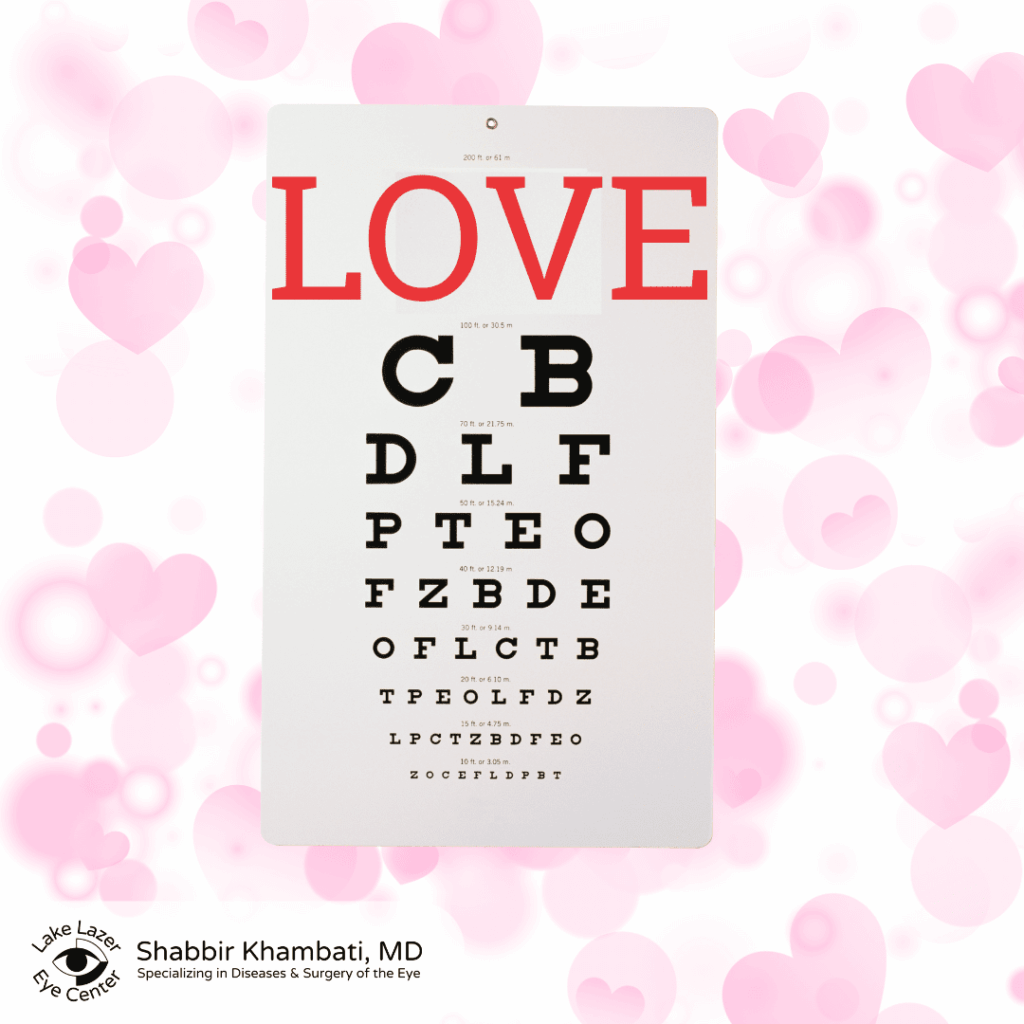
Valentine’s Month is the perfect time for some self-love. If you’re ready to break free from the constant reliance on glasses and contacts, Lake Lazer Eye Center’s SMILE Pro or SoftTouch LASIK in Detroit deliver sharper vision with safety innovations that make 2026 a standout year. Today’s procedures use bladeless femtosecond lasers, advanced mapping and ultra-fast eye trackers to tailor treatment to your eyes.
So, let’s talk about the many reasons there are to love laser vision correction in an age of advanced technology.
Faster, Smarter Lasers You Can Trust
LASIK was first performed in the late 1980s and transformed vision correction by reshaping the cornea using laser technology. Early versions relied on mechanical blades to create a corneal flap—a critical step in the procedure.
As LASIK technology advanced through the 1990s and 2000s, excimer lasers were introduced, offering greater precision and safety. Laser-driven techniques replaced blade-based methods as femtosecond lasers improved accuracy and customization in the 2000s. LASIK now offers sharper vision and better outcomes for millions worldwide.
Bladeless femtosecond technology offers micron-level precision, reducing variability compared with blades and supporting quick healing and comfort.
SMILE Pro is the latest evolution in laser vision correction, providing a fast, one-step alternative to traditional LASIK. Using an advanced ZEISS Visumax 800 laser, the procedure creates and removes a tiny lenticule through a micro-opening, reshaping the cornea with remarkable precision. Due to the nature of the procedure, SMILE Pro can be an excellent option for people with thinner corneas, active lifestyles or dry eye concerns. Most patients enjoy a quick, comfortable experience and notice clearer vision within hours, with minimal downtime.
Ultra-Custom Mapping Improves Outcomes
Surgeons use two advanced mapping techniques—wavefront analysis and topography-guided planning—to create a highly personalized LASIK treatment.
- Wavefront analysis measures how light travels through your entire eye, identifying the tiniest imperfections.
- Topography-guided planning maps the surface of your cornea in detail, allowing the laser to correct even subtle irregularities.
By combining these methods, Dr. Khambati can address both internal and surface-level optical flaws. This leads to sharper, clearer vision, often better than what glasses or contacts provide. Studies show that topography-guided LASIK results in a higher percentage of patients achieving 20/16 vision or better, which is sharper than the standard 20/20 benchmark.
Proven Results Patients Adore
With Modern treatments like our SoftTouch LASIK procedure, approximately 90% of patients reach 20/20 or better uncorrected vision, and over 99% achieve at least 20/40—the “legal to drive” benchmark. Major complications remain well under 1%.
Given these statistics, it’s no surprise that an impressive 96% of patients are satisfied with their procedure—the highest of any elective procedure.
Freedom That Fits Your Life
Patients appreciate waking up with clear vision and less hassle in daily life, travel, work and sports. Many experience rapid improvement within 24 hours and return to normal routines shortly thereafter.
Being free from corrective lenses is often transformative, making activities like running, swimming and cycling easier. Most LASIK patients can freely enjoy the convenience of unaided vision.
Why 2026 Feels Extra Safe
Next-generation platforms like ZEISS SMILE pro make laser eye treatments even safer and easier. These systems use advanced technology, reducing laser time and improving accuracy. The process is more efficient and provides greater safety and comfort for patients and doctors. Lake Lazer Eye Center was one of the first practices in the country to offer this advanced platform, which is why many patients travel to our metro Detroit-area offices for advanced vision correction with Dr. Khambati.
Fall in Love With Your Eyesight
When you combine patient-first screening with modern lasers, you get predictable outcomes and high satisfaction. If you’re curious about whether LASIK is right for you, Lake Lazer Eye Center can personalize the path to clearer vision. Your Detroit LASIK options have never looked better!
Frequently Asked Questions (FAQs)
What age is best for LASIK?
Most LASIK candidates are 21+ with a stable prescription for at least a year. Lake Lazer Eye Center confirms eligibility during a thorough exam and will only perform LASIK on candidates with a low degree of complication risks and a high chance of success.
How should I prepare for LASIK surgery?
Stop soft contacts per your surgeon’s timeline and follow pre-op hygiene and medication guidance. Lake Lazer Eye Center provides tailored recommendations to ensure your safety and the best visual outcomes.
Can I drive home after LASIK?
No, your surgeon will require you to arrange a ride. Many patients can drive the next day once vision and comfort meet safety standards. Your Lake Lazer provider will let you know when you’re clear to drive safely.
Will I still need reading glasses after LASIK?
LASIK has helped millions of people ditch their reading glasses and contact lenses. You should know, however, that nothing can stop age-related presbyopia (loss of reading vision and eventual development of cataracts) —it happens to us all. Some patients choose monovision lenses or reading glasses when “over-40 vision” advances.
Is LASIK covered by insurance?
LASIK and SMILE are typically considered elective and not covered, but FSA/HSA funds can often be used toward laser vision correction. Lake Lazer Eye Center can guide you on how to use this option and also offers transparent pricing and financing.
How soon can I work out or play sports after LASIK?
For SoftTouch LASIK, expect a short break from contact sports and dusty environments as your eyes heal. SMILE Pro procedure, patients can return to most activities (including wearing eye makeup and going to the gym) the very next day. Your Lake Lazer team will give you more precise timelines based on your healing, lifestyle, environment and of course the procedure Dr. Khambati recommends fro you.
What about night vision and halos after laser vision correction surgery?
Before laser vision correction, people with refractive errors (like nearsightedness or astigmatism) may experience halos and starbursts around lights at night because their cornea distorts how light enters the eye. After LASIK, the cornea is reshaped to focus light more accurately, which can reduce these distortions and improve night vision.
While some people have short-term nighttime halos right after surgery, this symptom is usually mild and resolves in a few weeks, leaving sharper night vision overall.
Can I fly soon after LASIK?
Air travel is generally safe once your surgeon clears you for air travel; keep lubricating drops handy for your flight and let your surgeon know if you experience any discomfort (which is unlikely).
With convenient locations in Clinton Township, Southfield and Milford, Lake Lazer Eye Center offers Metro Detroit-area patients comprehensive glaucoma care as well as up-front pricing and convenient and affordable payment plans for SoftTouch LASIK and the SMILE Pro procedure. Dr. Khambati has helped thousands of people from all over the world escape the restrictions of glasses and contacts through laser vision correction procedures. Detroit patients who are not candidates for vision correction can get our assistance with a contact lens evaluation or a selection of designer and specialty eyewear.