 586-792-3891



Cataract surgery is one of the most common procedures performed in the United States. Most people know it as a way to remove the cloudy lens that blurs and dims their vision. What many don’t know is that cataract surgery can also be an opportunity to correct vision problems they’ve lived with for years.
At Lake Lazer Eye Center, we offer advanced lens options that go beyond simply treating the cataract. The right lens can reduce or even eliminate your dependence on contacts, readers or bifocals for many of your daily activities.
Your Lens Is a Choice, Not a Given
During cataract surgery, your surgeon removes the failing lens in your eye and replaces it with a biocompatible, artificial lens. This lens is called an intraocular lens, or IOL. The basic option restores functional vision at one distance, and most patients still need glasses for reading or other tasks.
But at Lake Lazer Eye Center, you’ll find additional advanced lens technology that affords you more options.
Standard Monofocal Lenses correct vision at a single distance – ypically far away – and are generally covered by Medicare and most insurance plans. They’re reliable and time-tested. If glasses don’t bother you, this is a straightforward choice.
Astigmatism-Correcting Lenses are designed for patients who have astigmatism, a common condition where the eye isn’t perfectly round, causing blurred or distorted vision. These specialty lenses address both the cataract and the astigmatism at the same time – one procedure, one recovery, clearer vision across the board.
Multifocal and Extended Range Lenses offer clear vision at multiple distances – near, intermediate, and far. Patients who choose these lenses often find they can drive, use a computer, and read without reaching for glasses most of the time. They carry an additional out-of-pocket investment beyond what insurance covers, but for active patients who want as much freedom from glasses as possible, they’re worth a serious look.
Which Lens Is Right for You?
There’s no one-size-fits-all answer. The best lens depends on your lifestyle, your visual goals, your eye health, and your budget. Do you spend hours reading or working at a computer? Do you drive at night frequently? Are you comfortable wearing glasses for some tasks but not others?
These are the conversations we have during your consultation. We take detailed measurements of your eyes and factor in everything about how you use your vision, so the recommendation we make is built around your life, not a general guideline.
Meet Dr. Alisha Khambati, Cataract Surgeon
Dr. Alisha Khambati brings a deep commitment to ophthalmology that is personal as much as it is professional. The daughter of Lake Lazer Eye Center founder Dr. Shabbir Khambati, she grew up watching her father change patients’ lives through better vision – and chose to follow that same path.
Dr. Alisha completed her medical degree at Wayne State University School of Medicine and went on to complete her ophthalmology residency at the Kresge Eye Institute, one of the most respected ophthalmology training programs in the country and the same institution where her father trained. She brings current, advanced training in cataract surgery to the Lake Lazer Eye Center team.
Patients who meet Dr. Alisha quickly notice that she takes her time. She listens carefully, explains your options clearly, and makes sure you feel confident in whatever decision you make. This approach – thorough, unhurried, patient-centered – is the same standard Lake Lazer Eye Center has held for more than two decades.
Ready to Explore Your Options?
If you’ve been told you have cataracts, or if you’re starting to notice the signs (blurry vision, glare around lights, colors that look faded), now is a good time to schedule an evaluation.
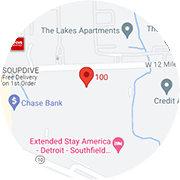
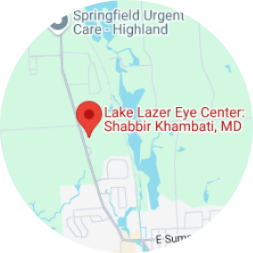
We serve patients throughout the Metro Detroit area in our Southfield, Milford, and Clinton Township offices.
Call us at (586) 792-3891 or request your cataract consultation online. We’ll help you understand your lens options and find the one that fits your vision and your life.